How to Find the Right Therapist: What to Look For, What to Ask, and When to Keep Looking
Finding a therapist is often treated as though the hardest part is deciding to go. But deciding to seek therapy is followed by another difficult task: trying to choose among therapists with different credentials, specialties, treatment approaches, fees, insurance coverage, availability, and options for in-person or telehealth sessions.
A therapist can be qualified, ethical, and helpful to other people and still not be the right person for you. You may need expertise they do not have, a more direct or more structured approach than they use, or a therapeutic relationship in which you feel able to speak openly and honestly.
That does not mean therapy should always feel comfortable. A good therapist may challenge you, point out contradictions, or ask you to stay with a subject you would rather avoid. The question is whether you can have those difficult conversations with someone who listens carefully, understands the problems you want help addressing, and responds constructively when you disagree, ask questions, or say that something is not helping.
Start With What You Need From a Therapist
Finding the right therapist becomes easier when you first identify what you want help with.
You do not need a diagnosis or the perfect words to explain what is wrong. Start with what is making daily life harder right now. Maybe panic is keeping you from driving. Grief is making it difficult to function at work or at home. A relationship has become confusing or painful. You are recovering from abuse. You keep falling into the same behavior or coping pattern even though you want it to change. You may also be looking for help managing symptoms related to a condition that has already been diagnosed.
Think next about what kind of help may work best for you. Do you want help with one immediate problem or with something that has been affecting you for years? Have you had therapy before? What helped you open up or make progress, and what made sessions feel less useful? Would you rather work with someone who asks direct questions and gives you things to practice, or someone who spends more time helping you understand patterns in your thoughts, emotions, and relationships?
These answers will not point you to one perfect therapist. They can help you narrow the search and recognize which therapists are more likely to match what you need.
How to Evaluate a Therapist’s Specialties and Experience
Therapist profiles can make very different therapists seem equally well suited to what you need. A biography may list anxiety, depression, trauma, grief, relationships, ADHD, stress, self-esteem, life transitions, and many other concerns.
A long list does not tell you how much experience the therapist actually has with the issue you want help with.
Pay attention to what the profile actually tells you. Does the therapist explain which clients they work with most often? Do they mention training or substantial experience with the issue you want help with? Do they explain how they work with clients, or does the profile rely mostly on promises of a safe and supportive space?
If you cannot tell, ask.
“How much of your work involves people dealing with ___?” is a reasonable question. So is, “What kind of experience do you have treating this?”
NIMH recommends asking prospective therapists about their credentials, specialties, treatment approach, and experience working with the specific problem for which someone is seeking help.
What Therapist Credentials Do and Don’t Tell You
Psychotherapy is provided by several types of mental health professionals, including counselors, clinical social workers, marriage and family therapists, psychologists, psychiatrists, and psychiatric nurses. Some of these professionals can also prescribe medication, depending on their license and the state where they practice.
The letters after a therapist’s name can tell you about their professional training and license. They do not tell you how much experience that therapist has with the issue you want help with or whether the two of you will work well together.
If you are looking for help with a specific problem, ask about relevant training and experience rather than assuming a credential tells you everything you need to know.
Questions to Ask a Therapist Before You Start
Terms such as CBT, psychodynamic therapy, DBT, ACT, EMDR, or trauma-informed care can tell you something about how a therapist works, but a list of approaches may still leave you unsure what sessions with that person would actually look like.
Ask the therapist to explain how they would use those approaches with someone seeking help with the issue you want to address.
You might ask:
What would therapy with you typically look like for someone seeking help with this issue?
Do you tend to be structured and directive, or does the client usually lead the session?
How do we decide what we are working toward?
How do you evaluate whether therapy is helping?
What do you usually do when a client feels stuck?
What happens if I tell you that something you are doing is not working for me?
You are not testing the therapist for a perfect answer. You are finding out whether they can explain how they work and whether that approach matches the kind of help you are looking for.
How to Tell Whether a Therapist Is a Good Fit
The relationship between therapist and client plays an important role in therapy. Research has consistently linked the quality of that working relationship, often called the therapeutic alliance, with psychotherapy outcomes.
But a strong therapeutic relationship is not the same as immediately feeling comfortable with or liking the therapist.
After the first few sessions, pay attention to how the relationship is actually working. Does the therapist listen closely enough to understand what you are saying? Can you correct them when they misunderstand you? Do their questions connect to the issue you came to address? Can you ask why they are recommending something? Are you beginning to understand the goals of the work and how the sessions are supposed to help?
Most importantly, are you becoming more able to speak honestly?
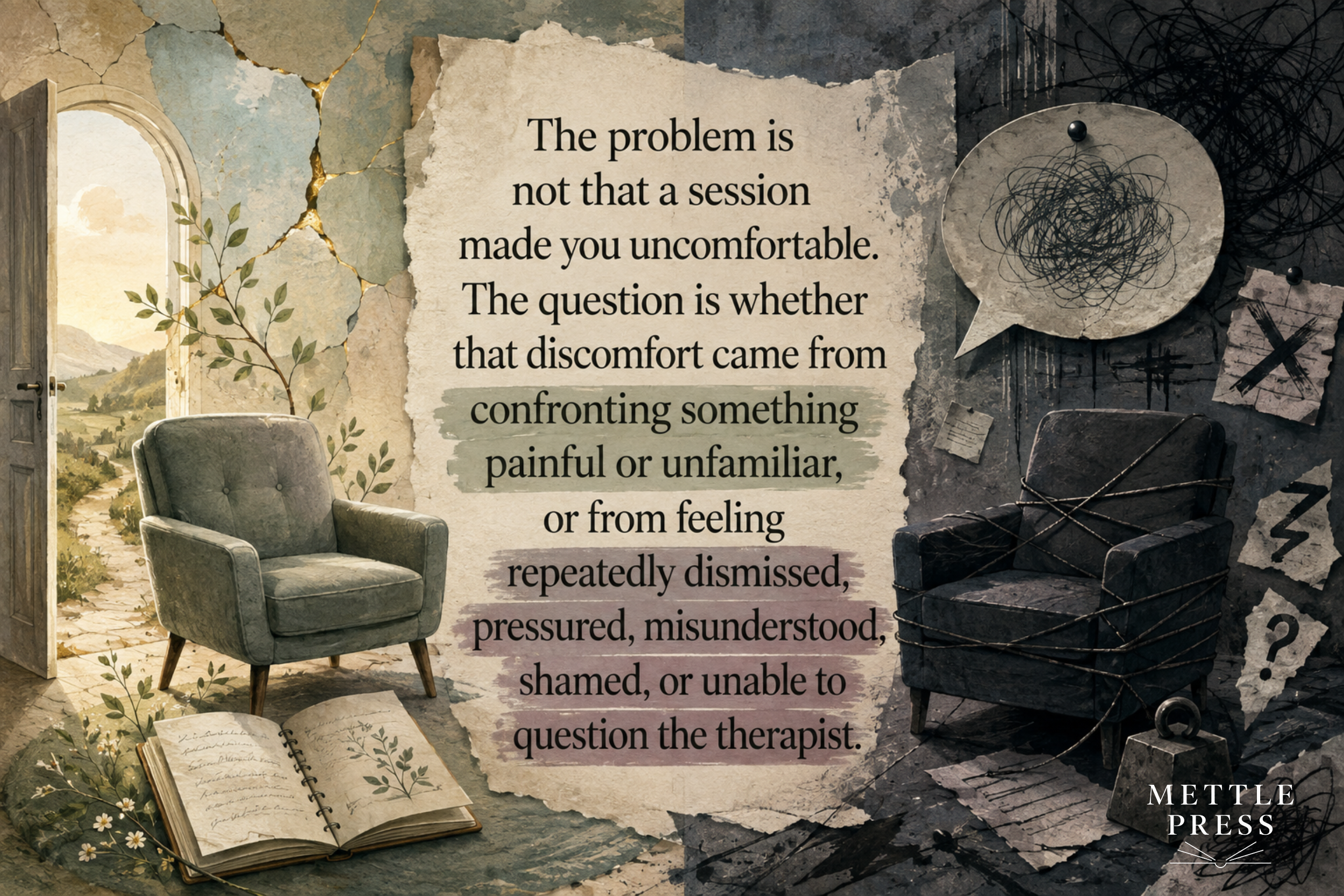
You may still feel nervous, embarrassed, sad, angry, or challenged. Therapy can involve difficult conversations. The problem is not that a session made you uncomfortable. The question is whether that discomfort came from confronting something painful or unfamiliar, or from feeling repeatedly dismissed, pressured, misunderstood, shamed, or unable to question the therapist.
A Good Therapist Will Not Always Agree With You
A therapist who always validates every conclusion you reach may feel reassuring, but agreement is not the same as help.
A therapist may notice that your explanation does not fit all the facts. They may ask about your role in a conflict. They may challenge a belief that protected you in one situation but is causing problems in another. They may encourage you to do something that feels unfamiliar or uncomfortable.
The difference is whether the therapist challenges you with respect.
You should be able to ask why the therapist sees something differently and say when an interpretation does not fit. A therapist should also be willing to reconsider when they have misunderstood you. Challenge can be part of productive therapy. Contempt, humiliation, coercion, or treating disagreement as disobedience are not.
What to Do When Therapy Is Not Working
Many people leave therapy without ever telling the therapist what was not working.
If you are uncertain about the fit and feel safe raising the issue, tell the therapist specifically what has felt confusing, unhelpful, or uncomfortable.
You can say:
“I’m not sure what we’re working toward.”
“I think I need more structure than I’m getting.”
“When I bring up this subject, I feel like we move away from it.”
“I didn’t feel understood when you said that.”
“I keep leaving with the same problem and I’m not sure what we are doing with it.”
“I don’t think this approach is helping me.”
The therapist’s response can help you judge whether the relationship is workable. They may explain their reasoning, change course, ask better questions, or acknowledge that another approach might serve you better. If your concerns are repeatedly dismissed or nothing changes after you raise them, it may be a sign that this therapist is not the right fit.
Signs It May Be Time to Find a Different Therapist
There is no universal number of sessions that tells you whether a therapist is right for you. Therapy can take time, and it may take more than one therapist or approach to find what works for you.
One awkward appointment does not necessarily mean the therapist is a poor fit. First sessions often involve gathering history, completing paperwork, answering unfamiliar questions, and getting used to someone you have just met.
Pay more attention when the same problems continue across several sessions, especially after you have tried to address them.
Consider looking elsewhere if the therapist consistently misunderstands the issue you came to address and shows little interest in correcting it; lacks experience with the problem you need help with; repeatedly pushes past boundaries without explaining why; cannot tolerate questions or disagreement; makes assumptions about your identity or circumstances rather than asking; or continues using an approach that is not helping after you have discussed the problem.

You do not have to prove that the therapist is bad at their job before choosing someone else. A therapist can be competent and still not be the right person for you.
Practical Tips for Finding the Right Therapist
Contact more than one therapist if you can. Availability changes, and speaking with several people gives you more than one option to compare.
Before a consultation, write down the two or three things you most want help with and the questions you do not want to forget. Ask directly about experience with the issue you are seeking help for rather than relying on a directory checkbox.
Confirm the practical details early. Insurance coverage, session fees, cancellation policies, location, telehealth options, and appointment times can determine whether you can realistically continue seeing the therapist even if the fit is otherwise good.
After the first few sessions, make a few private notes. What felt useful? What confused you? What did you avoid saying? Did the therapist understand the issue you wanted help with? Did anything leave you reluctant to return?
If something feels wrong but you cannot tell whether it is the difficulty of therapy or the relationship itself, bring it up if you feel able. The therapist’s response may help you decide whether to keep working with them or continue your search.
If you switch therapists, let the experience make your next search more specific. Maybe you discovered that you need more structure, more experience with trauma, a different communication style, or a therapist who can understand and discuss an important part of your life without making assumptions about it.
Finding the right therapist is not about finding someone who never frustrates you or always says the right thing. It is about finding a qualified professional who understands what you need help with, can explain how they intend to help, and creates enough trust for you to speak honestly even when therapy becomes difficult.