After Narcissistic Abuse: The Hidden Cost of Surviving and Rebuilding Your Life
Leaving a narcissistic, controlling, or emotionally abusive relationship can end one immediate problem: the other person no longer has the same access to your daily life.
It does not automatically restore what changed while you were trying to survive them.
Friends may be gone. Family relationships may be strained. Money may be tighter. You may have stopped doing things you once enjoyed, stopped trusting your own judgment, or become so accustomed to anticipating another person’s reactions that ordinary decisions now take far more effort than they should.
Some of those losses may have come from deliberate isolation, intimidation, financial control, or monitoring. Others may have accumulated because avoiding conflict slowly took priority over maintaining friendships, hobbies, routines, opinions, and independence. Psychological abuse and controlling behavior are recognized forms of intimate partner violence, and survivors can experience lasting mental and physical health consequences.
Surviving can leave someone facing another difficult task: rebuilding relationships, support, independence, routines, and confidence that were lost or weakened during the relationship.
When Friendships and Family Relationships Change After Narcissistic Abuse
People often assume that friends and family will simply return once the relationship ends. Sometimes they do. Sometimes there is more to repair.
You may have stopped answering calls because every conversation turned into questions you were not ready to answer. You may have declined invitations so often that people stopped asking. A partner may have criticized your friends, accused relatives of interfering, monitored your contact with them, created arguments before or after visits, or made spending time with other people exhausting enough that staying home became easier.
Other relationships may change after you leave. Mutual friends may refuse to take sides. Relatives may minimize what happened. Someone who only saw the charming or generous version of the person may question your account.
That can leave you grieving more than the relationship itself. You may also be grieving people you expected to still be there afterward.
Reconnection does not have to begin with a complete explanation. One message can be enough:
“I know I have been distant. I was dealing with more than I knew how to explain at the time. I would like to reconnect if you are open to it.”
Some people will respond well. Others may not. Rebuilding support is not the same as recovering every relationship you had before.
How to Rebuild a Support System After Narcissistic Abuse
“Build a support system” sounds useful until you are the person trying to figure out whom to call.
Make the idea concrete. Write down names under four headings:
Practical help: Who could help with transportation, childcare, moving, meals, paperwork, or an appointment?
Emotional support: Who can listen without pressuring you to reconcile, leave faster, forgive, explain yourself, or defend every decision?
Professional support: Do you have access to a therapist, domestic violence advocate, attorney, legal-aid service, financial counselor, doctor, or employee assistance program?
Emergency support: If you suddenly needed somewhere safe to go, someone to pick you up, or another person physically present, who could realistically help?
A person does not have to belong in every category. The point is to replace the vague idea that you “should have support” with a clearer picture of what support you actually have and what is still missing.
If the former partner is still threatening, stalking, monitoring, or trying to control contact, money, housing, or children, safety planning may be more important than ordinary reconnection. A safety plan is a personalized, practical plan intended to improve safety during abuse, while preparing to leave, or after leaving.
How to Recognize What You Lost in the Relationship
Loss of self can sound abstract until you name what actually disappeared.
Try making a “What Changed?” list:
People I stopped seeing
Places I stopped going
Activities I gave up
Opinions I stopped expressing
Clothes or appearance choices I changed
Money I stopped controlling
Decisions I stopped making for myself
Things I stopped buying
Subjects I learned not to mention
Responsibilities I took on to prevent arguments
Things I apologized for even when I had done nothing wrong
Then ask a second question:
Which of these changes still belong in my life, and which ones belonged to surviving that relationship?
You may decide that some changes were genuine growth. Others may make little sense once the person who demanded them is no longer controlling your choices.
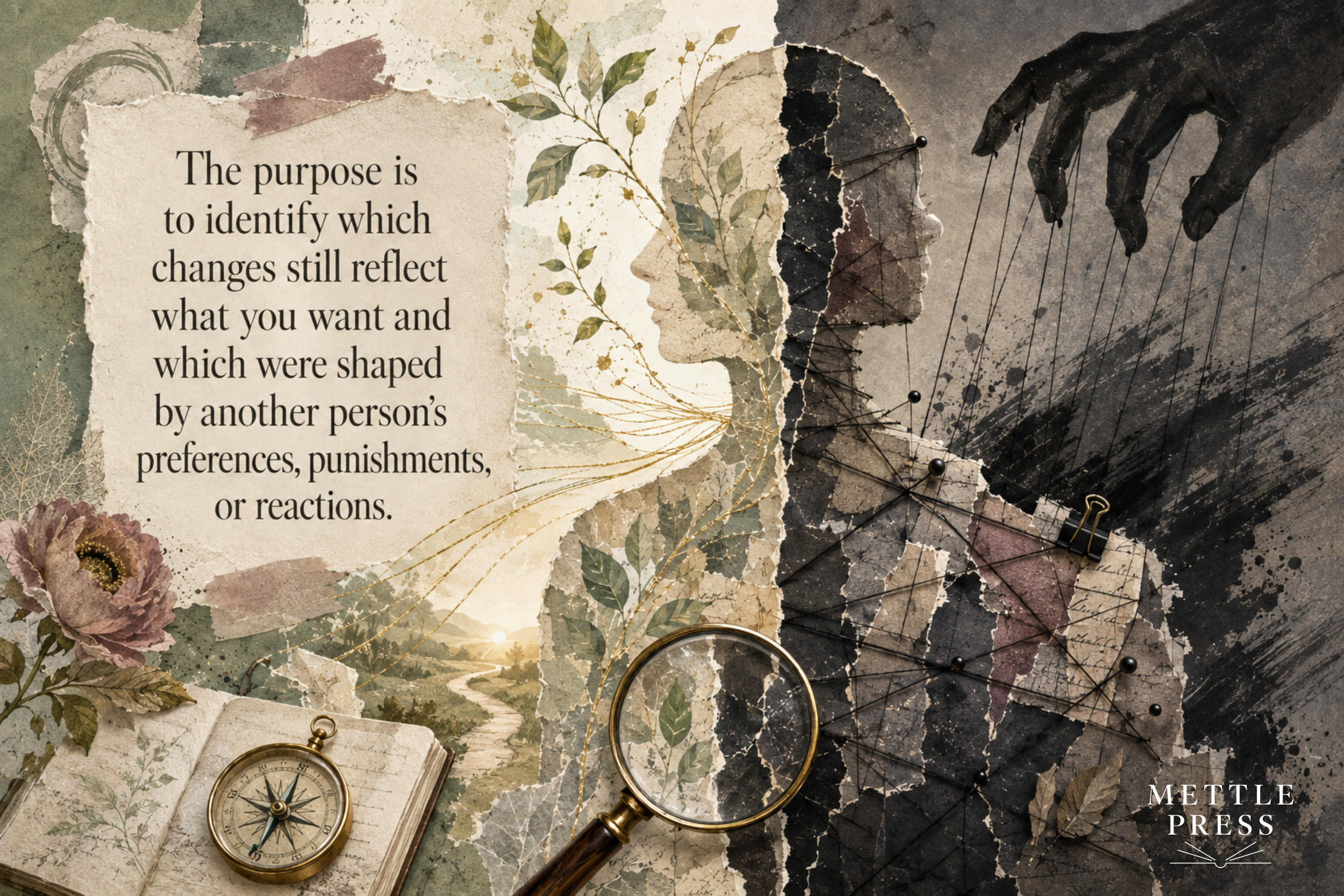
The purpose is to identify which changes still reflect what you want and which were shaped by another person’s preferences, punishments, or reactions.
Why Survival Habits Can Continue After the Relationship Ends
Some behaviors that feel frustrating afterward may have been useful inside the relationship.
Overexplaining may have developed because simple answers were challenged.
Watching someone’s face while you speak may have helped you detect when an argument was coming. Keeping screenshots may have become necessary because conversations were later denied. Agreeing quickly may have shortened conflicts. Asking permission may have been safer than making an independent choice.
The relationship can end while those habits remain.
You may prepare an elaborate explanation for being ten minutes late. Assume a delayed text means someone is angry. Feel suspicious when a person accepts “no” without demanding a reason. Rehearse a harmless request because you expect resistance.
Instead of immediately trying to stop the reaction, ask:
What am I expecting to happen next?
Then get specific. Am I expecting anger? Punishment? Silent treatment? Accusations? A demand that I prove what happened?
Next ask:
Has the person in front of me actually shown that they respond this way?
That distinction can help you notice when a present situation is being filtered through rules you learned somewhere else.
How to Rebuild Self-Trust After Narcissistic Abuse
Self-trust is difficult to rebuild through reassurance alone. It becomes more believable when you collect evidence that you can make choices and handle what follows.
Choose one low-stakes decision each day without asking someone else to approve it.
Pick the restaurant. Decide what to wear. Spend an hour however you want. Decline an invitation. Buy something inexpensive because you like it. Change your mind about a plan.
Afterward, write down two things:
What did I expect would happen because I chose for myself?
What actually happened?
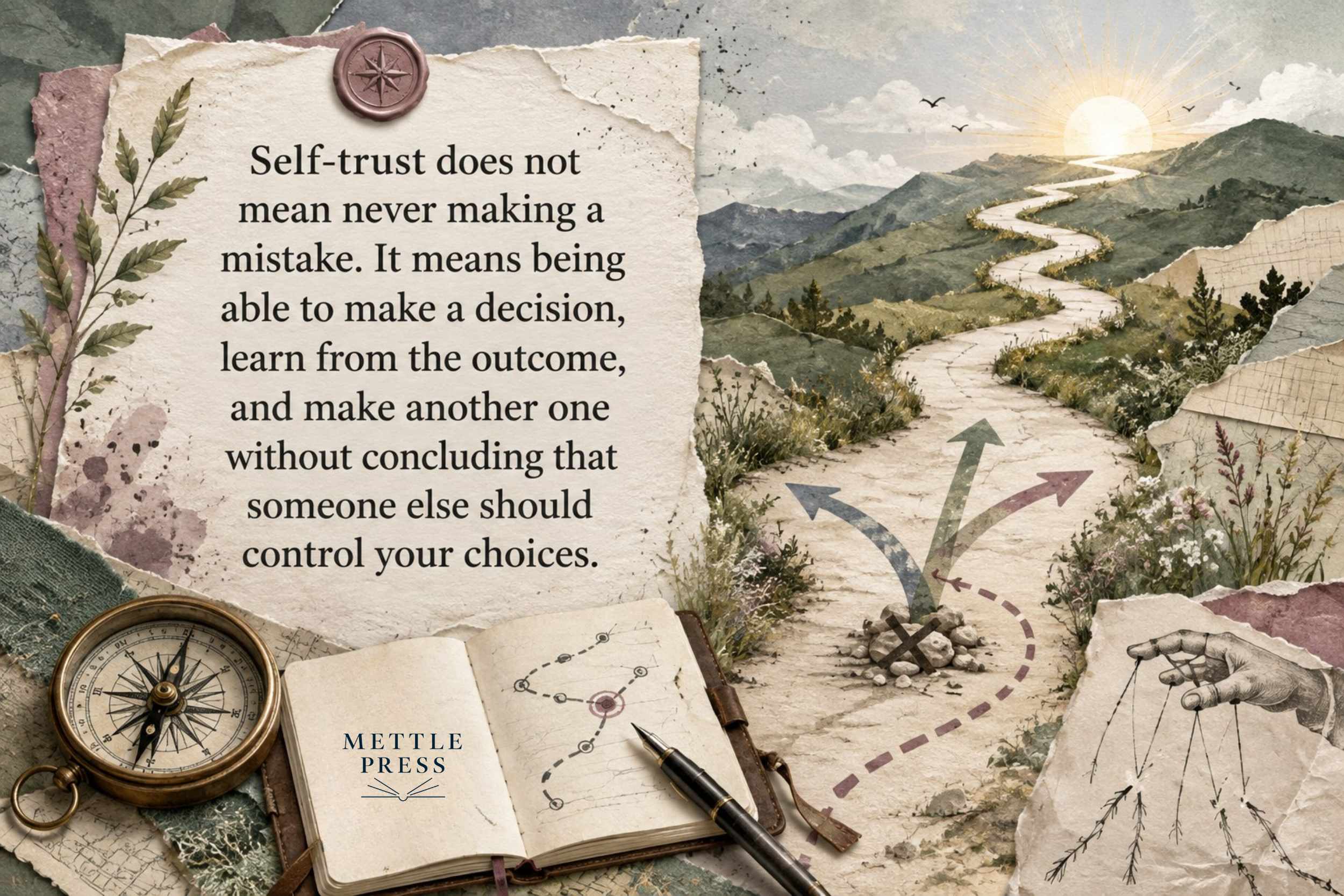
You are not trying to prove that every decision will be correct. Self-trust does not mean never making a mistake. It means being able to make a decision, learn from the outcome, and make another one without concluding that someone else should control your choices.
A short reality journal can help with the same process:
What happened?
What did I think it meant?
What was I afraid would happen next?
What actually happened?
Over time, this can help you distinguish what is happening now from what you learned to expect in the former relationship.
Rebuilding Financial and Digital Independence
If money or technology was used to monitor or control you, emotional recovery may be only one part of rebuilding independence.
Review what still connects you to the other person. That may include bank and credit accounts, automatic payments, shared subscriptions, insurance, beneficiary information, phone plans, passwords and recovery email addresses, cloud storage, shared calendars, location sharing, device access, important documents, debts, or jointly held accounts.
You do not need to address everything at once, and you should not make changes that could increase your danger simply because they appear on a checklist. Technology can be used to continue or escalate abuse, and survivor-safety organizations recommend incorporating digital changes into individualized safety planning rather than assuming every account should be changed immediately.
Financial abuse can include controlling another person’s earnings or spending, and coerced debt can leave financial problems that continue after the relationship ends. If you discover debt, contracts, property, or credit problems you do not understand, a domestic violence advocate, legal-aid organization, attorney, or qualified financial professional may be more useful than trying to untangle everything alone.
Why Grief Does Not Mean Leaving Was a Mistake
You can miss someone who hurt you.
You can also miss the house, the routine, mutual friends, financial stability, holidays, pets, plans, or the future you expected to have.
You may grieve the amount of time you spent trying to make the relationship work. You may miss the version of the person you saw at the beginning. You may even miss the periods when things were calm.
None of that proves that leaving was a mistake.
A person can understand that a relationship was harmful and still mourn what ending it cost.
That distinction is important because grief after abuse can otherwise become another reason to distrust your own judgment.
What Kind of Support Can Help After Narcissistic Abuse
Different losses require different kinds of support.
A therapist may help with trauma responses, grief, anxiety, self-trust, and patterns that continue into new relationships.
A domestic violence advocate may be more useful for safety planning, coercive control, stalking, shelter, local programs, or navigating ongoing contact with an abusive person.
An attorney or legal-aid service may be necessary for divorce, custody, housing, protective orders, shared property, or debts.
A financial counselor or qualified financial professional may help you understand credit, budgeting, debt, or rebuilding independent finances.
A support group can provide contact with people who have lived through similar forms of control or abuse.
You do not need to prove that the person had Narcissistic Personality Disorder before seeking any of this help. Describe the behavior you experienced: intimidation, monitoring, isolation, threats, financial control, humiliation, stalking, repeated manipulation, or whatever actually occurred.
You May Not Become the Person You Were Before
Some things may come back. Friendships can recover. Confidence can grow. Old interests may become enjoyable again. New routines can eventually feel ordinary.
Other losses may remain losses.
A friendship may not recover. Money may not return. A family relationship may stay different. Years cannot be given back. You may not become exactly the person you were before the relationship.
Recovery does not have to depend on reversing every consequence.
A more useful measure is whether your life is increasingly yours to direct. Who do you spend time with? What do you believe? How do you use your money? What do you say no to? What do you want to try? Whose reaction do you automatically consider before making a decision?
The hidden cost of surviving is not only what was done to you. It can also be what you had to give up, suppress, or stop trusting in order to get through it.
Rebuilding means being able to make those decisions for yourself again.
Join the Conversation
What did you lose while trying to survive a narcissistic or controlling relationship that other people did not immediately see? Was rebuilding relationships, practical support, financial independence, confidence in your own judgment, or your sense of who you were harder than you expected?