The Physical Effects of Narcissistic Abuse: How Chronic Stress Can Affect the Body
When people talk about narcissistic abuse, emotional abuse, or psychological abuse, the focus usually falls on mental health: anxiety, depression, PTSD, complex PTSD, panic attacks, and hypervigilance.
The physical effects receive far less attention.
Someone can spend months or years adapting to another person’s anger, criticism, manipulation, control, gaslighting, or unpredictable behavior. Over time, they may become highly attuned to changes in tone, facial expressions, footsteps, text messages, or other signs that conflict may be coming.
Even without physical violence, the body can begin responding as though danger is always close.
Heart rate can rise, muscles tighten, stress hormones are released, sleep becomes lighter, digestion changes, and the brain becomes more alert to possible danger.
The stress response is designed to help us survive a threat and then gradually return the body to its normal resting state once the danger has passed. When it is triggered repeatedly over months or years, the body may remain in a heightened stress state for longer periods and take more time to recover.
That prolonged strain can affect sleep, pain processing, cardiovascular function, digestion, immune activity, and hormone regulation. It may also intensify symptoms or make some health conditions harder to manage.
Although this post focuses on narcissistic abuse, many of the physical effects discussed here can also occur with emotional, psychological, physical, or other forms of prolonged abuse and chronic traumatic stress.
This does not mean narcissistic abuse directly causes every illness that develops later. Chronic diseases usually develop through a combination of genetics, existing health conditions, hormones, infections, environment, sleep, medications, and other influences.
Prolonged traumatic stress can still affect symptom severity, how quickly the body recovers from stress, and how difficult an existing condition is to manage.
Why Prolonged Abuse Can Become a Physical Health Issue
When the brain detects danger, the body prepares to respond. Heart rate and blood pressure may rise, muscles tense, breathing changes, and hormones such as adrenaline and cortisol help mobilize energy for the body’s response.
Once the danger passes, the body is designed to gradually return to its normal resting state.
Abuse can interrupt that recovery because the threat may be repeated, unpredictable, and triggered by ordinary moments such as a phone notification, footsteps in another room, or a change in someone’s tone.
With enough repetition, the body can become quicker to react and take longer to recover. Sleep may become lighter and easier to disturb, muscles may remain tense, digestive symptoms may occur more easily, and pain may feel more intense or become harder to manage.
Prolonged stress can affect several systems at once, including the nervous system, heart and blood vessels, digestion, hormones, and immune activity.
Chronic Pain and Fibromyalgia
Traumatic stress is frequently associated with chronic pain. Poor sleep can make pain feel more intense, and repeated muscle tension can contribute to headaches and pain in the jaw, neck, shoulders, and back. Stress can also affect how the nervous system processes pain.
Fibromyalgia is one condition in which chronic pain, fatigue, sleep problems, and changes in pain sensitivity can occur together. It can involve widespread pain, severe fatigue, unrefreshing sleep, difficulty concentrating, headaches, dizziness, and increased sensitivity to pain. There is no single established cause, and researchers are still studying how genetics, pain processing, sleep, immune and hormonal activity, and environmental factors contribute to the condition.
Trauma has also been examined as one possible factor. Studies have found an association between fibromyalgia and PTSD, and some suggest that people with PTSD may experience more severe fibromyalgia symptoms. That does not mean narcissistic abuse causes fibromyalgia. It means trauma may be one of several factors linked with fibromyalgia or with how severe the symptoms become.
That relationship should not be mistaken for evidence that fibromyalgia is psychological. Fibromyalgia involves real changes in how pain is processed, and the pain itself is physical.
Trauma, Immune Function, and Autoimmune Disease
Traumatic stress has also been associated with some autoimmune and immune-mediated diseases, including rheumatoid arthritis, lupus, multiple sclerosis, autoimmune thyroid disease, and inflammatory bowel disease. These conditions can be influenced by genetics, hormones, infections, environmental exposures, and changes in immune regulation.
One reason researchers are studying trauma in this context is that the body’s stress and immune systems influence one another. Prolonged stress may affect inflammatory activity and immune regulation, which could help explain why PTSD is associated with higher rates of some autoimmune conditions.
That association does not mean trauma directly causes autoimmune disease. It does mean prolonged traumatic stress may be one relevant factor in a person’s medical history and overall risk.
Chronic Stress Can Affect Inflammation
Inflammation is a normal part of the immune response. It helps the body fight infection and repair damaged tissue.
Problems can arise when inflammation stays elevated or is not well regulated.
Studies of chronic stress and trauma have found changes in inflammatory markers and immune signaling. Sleep, genetics, infections, metabolism, medications, and existing health conditions can also affect those markers.
Long-term stress may therefore influence health in part through changes in inflammation and immune activity. That does not mean inflammation proves that abuse caused a particular illness.
Cardiovascular Symptoms and Long-Term Heart Health
The cardiovascular system responds whenever the body prepares for danger. Heart rate may increase, blood pressure can rise, blood vessels may constrict, and stress hormones increase the body’s readiness to respond.
When these responses happen repeatedly, they can place ongoing strain on the heart and blood vessels. PTSD has been associated with higher rates of hypertension, coronary artery disease, heart attack, and stroke.
Stress can also cause noticeable physical symptoms, including palpitations, a racing heartbeat, chest tightness, trembling, sweating, dizziness, and shortness of breath.
Because those symptoms can also have other medical causes, they should not automatically be attributed to anxiety or stress.
Chronic Stress Can Disrupt Digestion
The brain and digestive system communicate continuously through nerves, hormones, and immune signals.
That is why stress can upset the stomach before a confrontation, suppress appetite during a crisis, or suddenly change bowel habits.
When stress becomes chronic, some people experience recurring abdominal pain, reflux, bloating, diarrhea, constipation, nausea, appetite changes, or worsening irritable bowel syndrome symptoms.
These symptoms are physically real, even when stress contributes to them. Ongoing digestive problems should still be evaluated because inflammatory bowel disease, celiac disease, infections, ulcers, gallbladder problems, medication effects, and other conditions can cause similar symptoms.
Poor Sleep Can Amplify Pain, Fatigue, and Cognitive Problems
Sleep often changes when someone lives in an unpredictable or threatening environment.
A person may begin sleeping lightly, waking at small sounds, replaying arguments before bed, or waking during the night already braced for what might happen next.
Poor sleep affects far more than energy. It can increase pain sensitivity, interfere with immune and hormone regulation, raise blood pressure, and make it harder to remember information or concentrate.
When sleep is repeatedly disrupted, pain can become more intense, fatigue worsens, and thinking may become less clear. For someone already living with fibromyalgia, migraine, autoimmune disease, chronic pain, or another medical condition, poor sleep can also make existing symptoms more difficult to manage.
Severe Fatigue and Brain Fog Can Disrupt Daily Life
Severe fatigue is different from ordinary tiredness.
It can make showering, cooking, driving, concentrating, walking through a store, or completing a workday feel much harder than usual. Rest may provide little relief.
Chronic stress can contribute through poor sleep, persistent pain, ongoing muscle tension, and a body that remains on alert for long periods.
Brain fog may appear alongside that exhaustion. A person may lose words mid-sentence, struggle to follow a conversation, reread the same page without absorbing it, or find routine tasks unexpectedly difficult to organize.
Fatigue and brain fog can also be caused by medication effects, fibromyalgia, hormonal problems, neurological conditions, depression, anxiety, and other illnesses. Chronic stress may worsen those symptoms without being their sole cause.
Stress Can Worsen Headaches, Migraines, and Muscle Pain
Stress can cause the body to hold tension for long periods. The jaw may tighten, the shoulders remain raised, the neck stiffens, and teeth may grind during sleep.
Over time, that tension can contribute to jaw pain, neck and shoulder pain, back pain, and tension headaches.
Stress can also trigger or worsen migraine attacks in people who are already susceptible. It may make migraines more frequent or more severe without being the underlying cause of the condition.
Hormonal and Metabolic Systems Also Respond to Chronic Stress
Stress hormones help regulate energy use, blood sugar, blood pressure, inflammation, and the sleep-wake cycle.
Prolonged adversity and PTSD have been associated with changes in cortisol regulation and with metabolic syndrome, which can include high blood pressure, elevated blood sugar, insulin resistance, and abnormal cholesterol or triglyceride levels.
Metabolic health is influenced by genetics, age, medications, nutrition, activity levels, sleep, and socioeconomic conditions. Chronic stress may contribute to metabolic problems by affecting hormone regulation, appetite, and the way the body uses and stores energy.
Prolonged Stress Can Affect Reproductive Health
Severe or prolonged stress can affect hormones involved in menstrual cycles, sexual functioning, and pregnancy.
Some people experience menstrual irregularities, changes in libido, or other reproductive symptoms during periods of sustained stress. Research has also linked significant adversity with higher rates of some pregnancy complications and poorer maternal-health outcomes.
These findings do not mean stress explains every reproductive problem. Ongoing symptoms should still be evaluated for gynecological, hormonal, endocrine, or other reproductive causes.
Abuse Can Make an Existing Illness Harder to Control
A person does not have to develop a new diagnosis for abuse to affect their physical health.
Someone may already be living with fibromyalgia, lupus, multiple sclerosis, migraine, inflammatory bowel disease, thyroid disease, diabetes, heart disease, or chronic pain. Abuse can make those conditions harder to manage by adding poor sleep, constant muscle tension, repeated stress responses, financial pressure, and fewer opportunities to recover.
In some cases, the abuse interferes directly with treatment. A controlling partner or family member may restrict access to money, transportation, medication, insurance information, or appointments. They may criticize someone for resting, accuse them of exaggerating symptoms, or turn illness itself into another source of conflict.
The original condition may have nothing to do with the abuse, yet the abuse can still make it much harder to manage. Pain may worsen when sleep is poor, a flare may last longer when rest is impossible, medication may be delayed when someone controls the household money, and appointments may be missed because transportation is withheld.
Those are real medical effects, even when abuse did not cause the underlying disease.
Mental Health Diagnoses Should Not End the Medical Investigation
PTSD, complex PTSD, anxiety, depression, panic symptoms, dissociation, and hypervigilance can produce physical symptoms or make existing ones worse.
A mental health diagnosis, however, should not be used to explain every physical complaint. Anxiety can exist alongside heart disease, PTSD alongside autoimmune disease, and depression alongside thyroid disease. Someone with fibromyalgia can also experience panic attacks.
Stress can affect heart rate, blood pressure, muscle tension, digestion, sleep, pain sensitivity, hormone activity, and immune signaling. Those effects are physical, even when stress is one of the factors contributing to them.
Stress may be part of what is happening, but it should not become a reason to stop looking for other medical causes.
What the Research Allows Us to Say
Research has consistently found that prolonged stress can change how the body responds to and recovers from threat. Trauma and PTSD are associated with chronic pain and fibromyalgia, and PTSD has also been linked with several autoimmune and cardiovascular conditions. Chronic stress can also disrupt sleep, digestion, muscle tension, and other physical functions.
What the evidence does not show is that narcissistic abuse directly causes a specific chronic disease in every person who develops one.
Most illnesses develop through several influences at once, including genetics, infections, hormones, age, environment, medications, access to care, health behaviors, and chance.
Trauma can still affect symptom severity, disease management, or long-term risk without being the sole cause of an illness.
A Survivor Should Not Have to Prove a Straight Line From Abuse to Illness
For someone who has spent years having their reality questioned, unexplained physical symptoms can bring back the same pressure to prove that something is wrong.
They may already have been told they were too sensitive, exaggerating, remembering events incorrectly, or imagining problems. Then they become ill and hear a new version of the same doubt: their tests are normal, anxiety may be the cause, or they are simply stressed.
Sometimes anxiety is part of what is happening. Sometimes another medical condition has not yet been identified. More than one problem may be present at the same time, and medicine does not always provide an immediate answer.
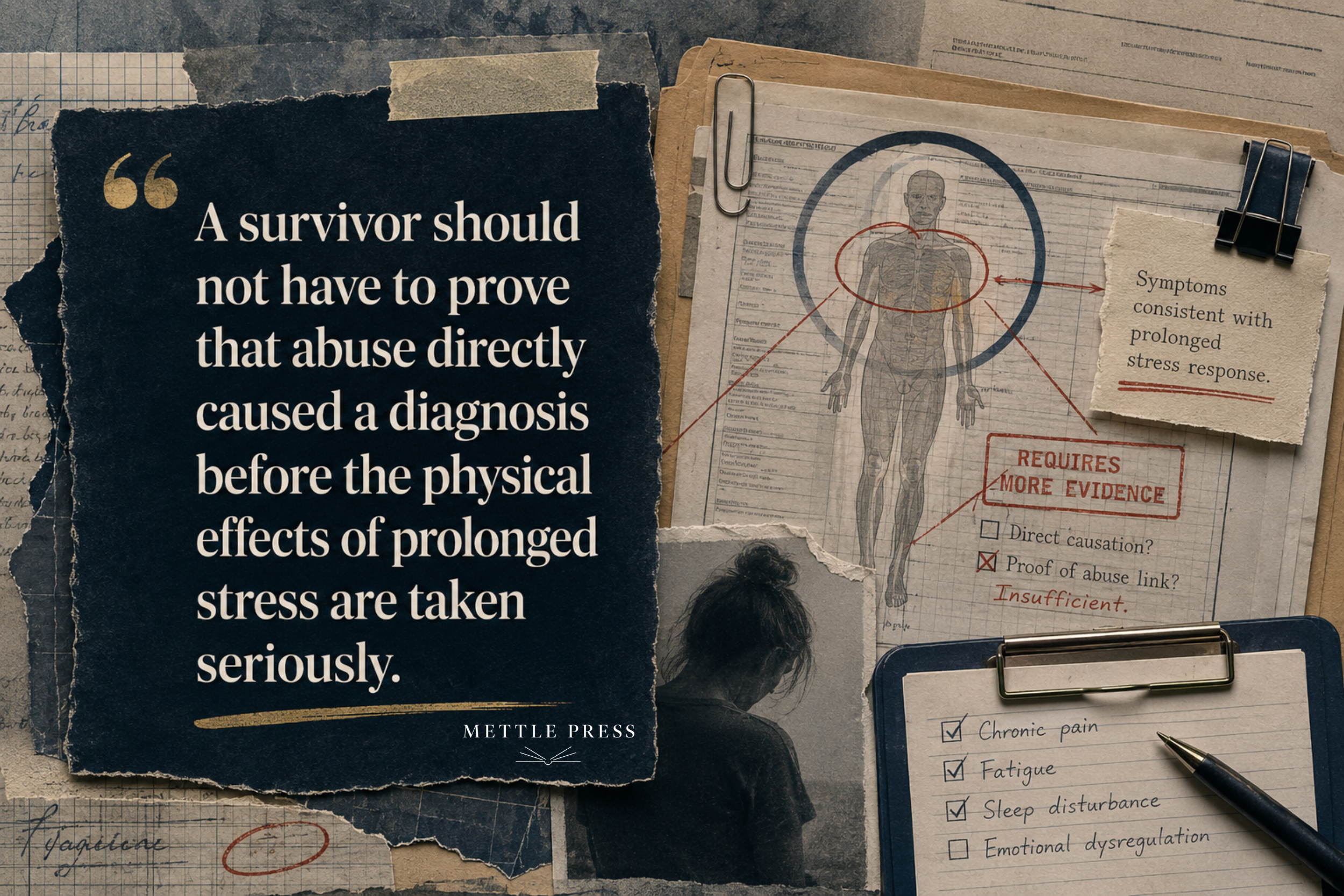
A survivor should not have to prove that abuse directly caused a diagnosis before the physical effects of prolonged stress are taken seriously.
Years of poor sleep, constant muscle tension, repeated stress responses, limited recovery, and the strain of managing an illness in an unsafe environment are all relevant to a person’s medical history, even when they do not explain a specific diagnosis.
For some survivors, the lasting effects may appear as pain that becomes harder to control, migraines that grow more frequent, exhaustion that limits work and daily life, or an existing illness that becomes increasingly difficult to manage.
There may be no bruise, broken bone, or scan that captures those effects.
The absence of a visible injury does not mean the body came through unharmed.
This article is intended for education and advocacy and is not a substitute for medical advice or individualized care. Trauma and chronic stress have been associated with a range of physical symptoms and health conditions, but an association does not prove that abuse directly caused a particular illness. New, persistent, severe, or worsening symptoms should be evaluated by a qualified healthcare professional.