Living With Fibromyalgia: When Trauma Doesn't Stay in the Past
For more than a decade, I have been dealing with pain without having a clear explanation for why my body hurt the way it did. I learned how to work around it, push through it, change my plans because of it, and sometimes question whether I was overreacting because I did not have a name for what was happening.
Recently, the pain became significantly worse, and I ended up in the emergency room.
That visit started a long stretch of doctor's appointments, bloodwork, imaging, evaluations, follow-ups, and test after test as doctors tried to figure out what was happening to my body.
The process itself has been exhausting. When you are already living with chronic pain and severe fatigue, going from appointment to appointment, sitting in waiting rooms, undergoing tests, explaining the same symptoms again and again, and waiting for answers takes energy you barely have to begin with.
But after more than a decade of living with this pain, I finally had an answer.
Fibromyalgia.
I was diagnosed with fibromyalgia.
There is a strange sense of peace in finally being able to put a name to something that has been affecting my life for years.
The diagnosis does not make the pain disappear. There is no cure that suddenly gives me my old life back. But I no longer have to wonder whether there is an explanation for what I have been experiencing.
There is.
And, as difficult as it is to admit, having an official diagnosis also gives me something I wish I did not need: proof.
When you live with pain other people cannot see, simply telling them what is happening is not always enough. Invisible pain can be difficult for other people to understand, especially when there is nothing outwardly showing how much someone is struggling.
A doctor's diagnosis should not be what makes someone's pain worthy of respect, but too often it is.
Now there is a medical name attached to what I have been trying to explain for years.
That brings relief.
It also makes me sad that I needed a diagnosis before some people would fully understand that my pain was real.
What Fibromyalgia Is and How It Affects the Body
Fibromyalgia is not just being sore or tired.
It is a chronic condition that changes the way the body experiences pain. It can cause widespread aching, extreme fatigue, poor sleep, stiffness, muscle tenderness, headaches, numbness or tingling, digestive problems, and what is often called "fibro fog," which can make it harder to think clearly, focus, or find the right words.
It can also make the body unusually sensitive to things like touch, pressure, temperature, light, or sound.
Fibromyalgia does not look exactly the same for everyone. Even for one person, the symptoms can shift from one day to the next or sometimes from one hour to another.
There is no cure, and there is no single known cause. Research suggests that genetics, illness, injury, changes in how the body processes pain, and long-term physical or emotional stress, including trauma or abuse, may all play a role.
That matters to me because my story did not begin with fibromyalgia.
It began much earlier.
The Abuse Ended. My Body Did Not Forget.
I am 38 years old.
The abuse in my life began in childhood and continued throughout my life, in different forms and at different levels of severity, until very recently in my late 30s.
For almost four decades, my body lived with fear, stress, emotional pain, and the possibility of being hurt.
When people talk about abuse, we often focus on the effects we recognize most easily: bruises, injuries, fear, anxiety, depression, broken relationships, or difficulty trusting people.
What we do not talk about nearly enough is what years of living under threat can do physically.
When you live through repeated abuse, you learn to notice everything: a change in someone's tone of voice, the expression on their face, the way they walk into a room, whether their mood has shifted, whether you said something wrong, or whether something is about to happen.
Your muscles tense. Your heart races. Your body starts preparing for danger before your mind has fully processed what is happening.
You may sleep without ever feeling fully rested. You may stay tense even when everything is quiet because experience has taught you how quickly a calm room can stop being calm.
When your body spends years reacting this way, those responses do not necessarily disappear simply because the abuse ends.
I cannot scientifically prove that the abuse I survived caused my fibromyalgia, and it would be inaccurate to say trauma directly causes every case.
But research has found connections between trauma, adverse childhood experiences, chronic stress, abuse, and chronic pain later in life.
For me, it is impossible to look at nearly four decades of trauma and abuse and completely separate those experiences from what my body is going through now.
The abuse finally stopped.
The effects did not stop with it.
The Unpredictability of Fibromyalgia
Every morning I wake up without knowing how much pain I will be in or what my body will let me do.
I do not know where the pain will be, how intense it will become, how much energy I will have, or whether fibro fog will make it difficult to concentrate, remember things, or find the words I am trying to say.
One day, my entire body can hurt. The next, the pain may settle into one specific area.
Sometimes it changes within hours.
I can wake up feeling one way and, by the afternoon, feel like I am in a completely different body.
The symptoms do not care what I have planned, what needs to get done, or whether someone is depending on me. They do not care that yesterday was already hard and I desperately need today to be easier.
Some mornings, I wake up and have to find out what kind of pain I am dealing with that day. Other mornings, the pain has kept me awake all night, so I already know the day is starting with both pain and exhaustion.
Then I have to figure out whether I can walk normally, use my hands, concentrate, leave the apartment, make food, keep up with chores, or do any of the things I had planned.
Sometimes I can.
Sometimes I cannot.
What Fibromyalgia Pain Feels Like
Fibromyalgia pain is hard to describe because it can affect my entire body at once or concentrate in certain areas, and the type and intensity of the pain can change throughout the day.
Some days, I ache from my head down to my feet, and even the smallest movements can hurt. Other days, the pain settles more heavily into specific areas like my lower back, hips, legs, arms, hands, or feet.
The intensity can be difficult to describe, but at its worst, the pain is excruciating.
Sometimes it is a deep, heavy ache that makes my limbs feel weighed down, and even simple movement takes more effort than it should.
Other times, the pain is sharp and radiates through different parts of my body in sudden zaps.
Every day, my muscles throb, tighten into painful knots, and can spasm without warning. They feel stiff, sore, and bruised, almost as if I have pushed my entire body through an intense workout even when I have barely done anything.
Most of the time, I cannot find a comfortable position. Sitting hurts, so I lie down. Then lying down hurts, so I move again. Standing hurts too. It becomes a frustrating cycle of constantly changing positions, trying to find some kind of relief, and realizing I cannot find one.
Even touch can hurt.
A gentle squeeze, light pressure, or a hug from my husband that would normally feel comforting can become painful because my body can be extremely sensitive to touch.
Something does not have to injure me for it to hurt.
And the symptoms go beyond muscle pain.
I also deal with headaches, numbness and tingling in my hands and feet, extreme sensitivity to temperature changes, digestive problems, and crushing exhaustion.
And as much as I can describe the symptoms, there are parts of this pain that are difficult to understand unless you have lived inside it.
Some Days, Basic Things Become Impossible
There are days when the pain is so severe that I cannot walk by myself.
There are days when I cannot twist the cap off a water bottle.
There are days when I cannot type on my computer because my hands hurt too much.
There are days when lifting a fork to my mouth takes more effort than it should ever take just to eat.
These are things I deal with regularly. This is part of what living with fibromyalgia looks like for me.
There are days when I cannot keep up with basic household chores, so my husband has to take on more of the responsibility for keeping our apartment together. That extra responsibility can overwhelm and stress him too, and it is hard for me knowing that my fibromyalgia affects his daily life as well.
There are even days when I cannot stir the mixture to make the energy bites my husband loves to eat for breakfast.
That may sound like a small thing.
To me, it is not.
It is one of the simple ways I care for someone I love, and there are days when fibromyalgia takes even that from me.
Fibromyalgia, Pain, and Unrefreshing Sleep
Sleep should give my body a chance to recover.
For me, it never does.
Every night, I toss and turn because the pain is agonizing and I cannot find a position that feels comfortable.
My back hurts. My hips hurt. My legs hurt. My muscles ache.
I turn onto one side because the other hurts, only for that side to start hurting too. Then I move again.
And again.
This continues throughout the night, and there are nights when I never really fall asleep.
Morning comes anyway, leaving me to start the day already exhausted and still in pain.
Fibromyalgia fatigue is more than feeling sleepy. It is a deep physical exhaustion that sleep does not fix.
Even when I do manage to sleep for hours, I still wake up feeling as though my body never recovered overnight.
Because pain interrupts my sleep every night, everything is harder the next day. Walking takes more effort. Thinking takes more effort. Remembering, typing, talking, concentrating, and making decisions all take more effort.
The pain keeps me from truly resting, and the lack of restorative sleep leaves me even more exhausted and with less energy to manage the pain the next day.
Fibro Fog Affects More Than Memory
Sometimes I lose my train of thought in the middle of a sentence or know exactly what I want to say but cannot find a word I have used countless times before.
I can forget what I am doing while I am doing it.
I can read an entire paragraph and realize I did not process any of it.
Sometimes typing is difficult because my hands hurt. Other times, my hands are capable of typing, but my brain cannot organize the thoughts I am trying to put into words.
That is one of the most frustrating parts of fibro fog.
I know how quickly I normally think. I know how easily words and ideas usually come to me.
Then suddenly, something I know I want to say can feel just out of reach.
Functioning Does Not Mean I Am Fine
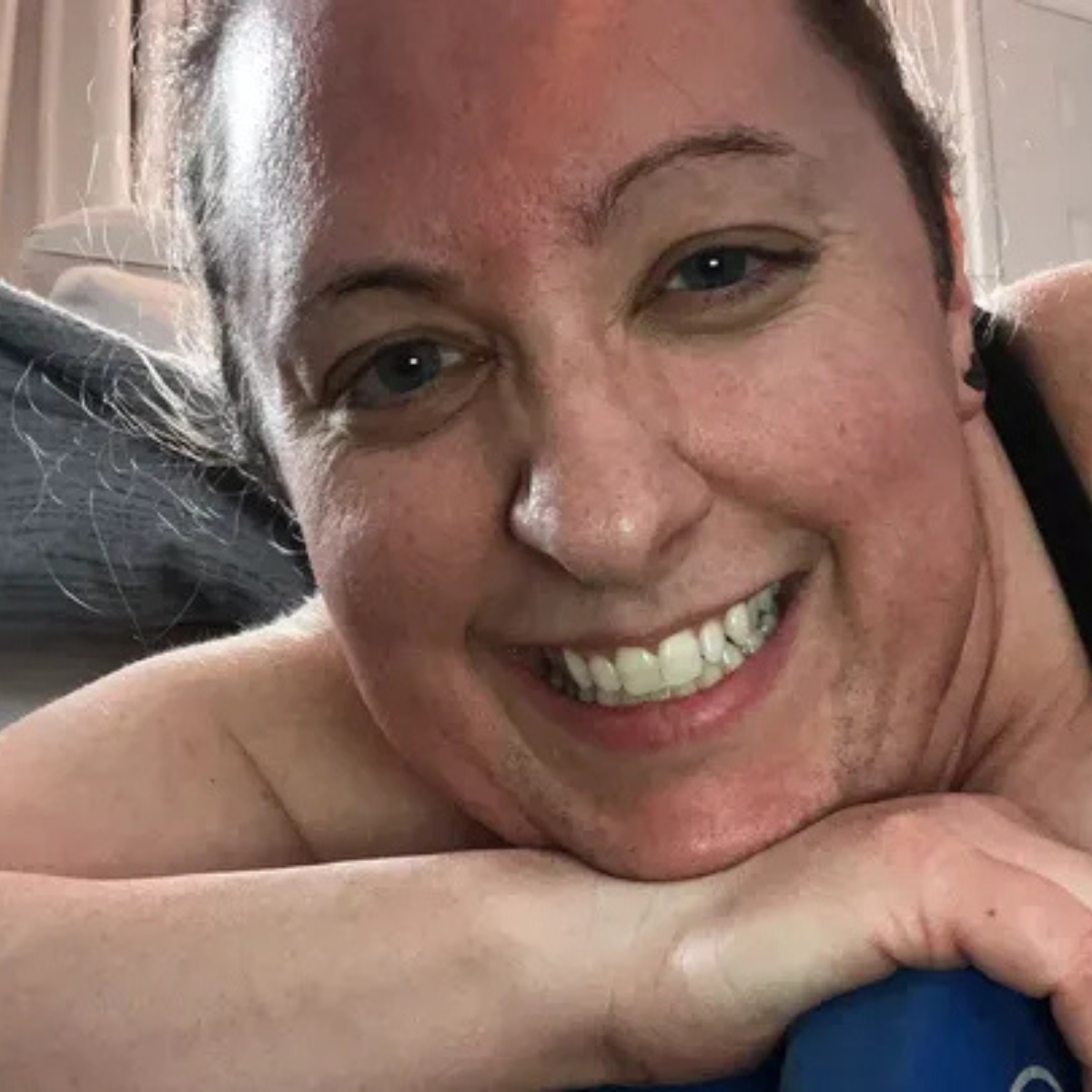
One of the biggest misconceptions about chronic pain is that if you can function, your pain must not be that bad.
But being able to do something does not mean the pain is mild or manageable.
Sometimes functioning means doing things while I am in severe pain because if I waited until I felt well enough, I might never do them.
I push through pain levels that would make many people stop because I still want a life beyond fibromyalgia.
So I leave the house while I am in pain. I finish things while I am in pain. I have conversations while I am in pain. I smile and laugh while I am in pain.
I am trying to live despite it.
Seeing me do something tells you nothing about how much pain I was in while doing it, what it took for me to get through it, or how much recovery I may need afterward.
I Don't Really Have "Good Days"
People sometimes ask whether I am having a good day.
I understand what they mean, but "good day" does not really describe my life anymore.
I do not have days when fibromyalgia disappears. I have stretches of time when I am stronger than the pain.
Maybe for a few hours I can do more. Maybe my mind feels clearer. Maybe the pain stays at a level I can manage. Maybe I can take part in something I care about without my symptoms completely taking over.
Those hours matter.
But they are not the same as being pain-free.
For me, feeling better does not mean I feel well. Sometimes it just means the pain has loosened its grip for a few hours.
Living With an Invisible Illness
Fibromyalgia is often called an invisible illness because someone can look at me and have no idea what is happening inside my body.
I can be dressed, talking, smiling, sitting at a table, posting a picture, or spending time with someone and still be in significant pain.
What you see does not show the throbbing muscles, sharp pain, stiffness, spasms, heaviness, exhaustion, or fibro fog.
You cannot see that earlier in the day I may have struggled to hold a fork, needed help walking, or been unable to open a bottle.
You cannot see how much sleep I lost the night before because of the pain.
You are seeing one moment.
You are not seeing what it took for me to get to that moment.
Because fibromyalgia is invisible, people do not always understand how severe it can be, and that misunderstanding can turn into judgment.
People may assume someone is lazy, making excuses, exaggerating the pain, or simply needs to push through it.
Those assumptions are easy to make when you are not the one waking up every day already wondering how much pain your body will make you carry.
There are days when getting out of bed is impossible.
Not because I do not want to get up.
Because my body hurts so badly that getting up is more than I can physically manage at that moment.
Needing help is not laziness.
Canceling something because my body cannot handle it is not laziness.
Resting because I have reached my physical limit is not laziness.
And being in pain does not mean I stop being capable of happiness.
I can laugh and still be in pain.
I can enjoy spending time with someone and still be in pain.
I can accomplish something and still be in pain.
None of those things make the pain less real.
It can be especially painful when someone close to you has difficulty understanding what your body is going through.
You want the people closest to you to understand that when you say, "I can't," it is not because you do not want to.
When you cancel plans, it is not because you do not care.
When you say you are exhausted, you are not talking about being a little tired after a long day.
Sometimes you simply want the people closest to you to trust what you are telling them about your own body, even when they cannot see the pain themselves.
It hurts when that does not happen.
The Emotional Toll of Chronic Pain
Living in pain changes more than what I can physically do. It changes how I think about my time, my plans, my independence, and my future.
It is frustrating when my mind wants to do something and my body will not cooperate.
I feel guilty when my husband has to take care of something I wanted to handle myself. I feel disappointed when I have to cancel something I genuinely wanted to do. Even making plans can create anxiety because I have no way of knowing whether my body will cooperate when that day arrives.
There is also the fear of waking up tomorrow and feeling worse.
And there is anger.
I am angry that experiences I never asked for took so much from me while they were happening.
I am angry that I spent years dealing with the mental and emotional consequences of abuse.
And I am angry that at 38, after living with physical pain since I was eight and with fibromyalgia symptoms for more than a decade, I am now trying to understand a chronic condition that affects almost every part of my daily life.
I do not want to soften that anger just because anger makes some people uncomfortable.
It is part of this too.
The Hardest Part Isn't Always the Pain
As difficult as the physical pain is, sometimes it is not the hardest part.
Sometimes the hardest part is acting like I am fine when I am exhausted from fighting my own body all day.
It is watching other people do ordinary things without having to think about how much pain or exhaustion those things might cause afterward.
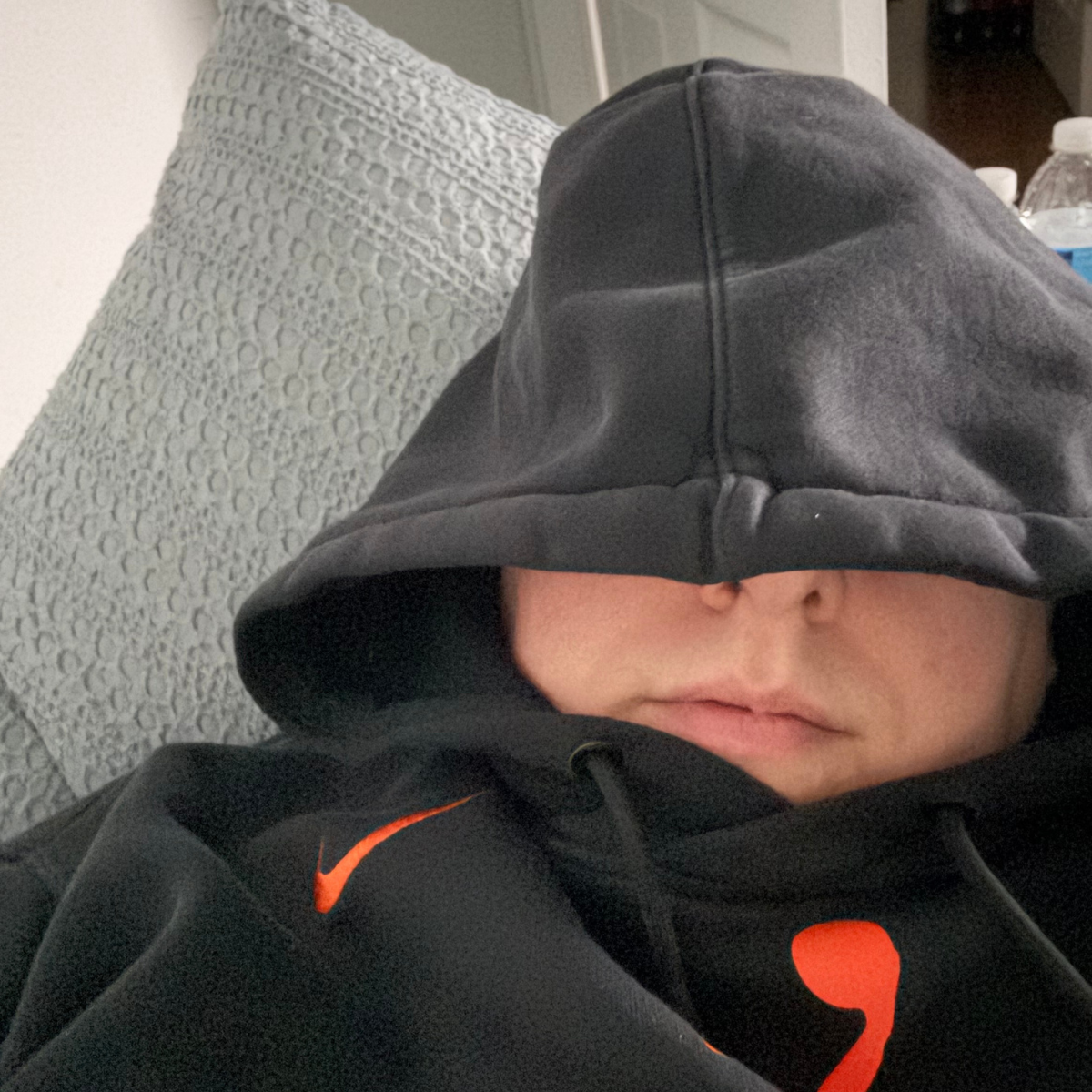
Chronic pain creates a strange kind of grief because the person you miss is yourself.
I miss who I was before pain became part of nearly every decision.
I miss making plans based on what I wanted to do instead of whether my body could handle it.
I miss doing something without wondering whether I would pay for it later with more pain.
I miss not having to ration my energy.
I miss waking up without immediately taking inventory of which parts of my body hurt.
I miss being able to assume that if I wanted to get up and go somewhere, I could.
That person still feels like me.
But I no longer get to move through life the way she did.
It is painful to remember how easily I once did things that now require planning, help, recovery, or sometimes have to be skipped completely.
A Diagnosis Changes the Meaning of the Years Before It
Being diagnosed has made me look differently at all the years before I had an answer.
I think about the days when something felt wrong but I could not explain why.
I think about the times I told myself I just needed to push harder.
I think about how frustrated I became with my body because I expected it to cooperate.
Now I finally have context I did not have before.
There is a difference between asking myself, "Why can't I handle this?" and knowing that my body is dealing with a chronic condition.
There is a difference between seeing every limitation as a personal failure and recognizing that sometimes my body has simply reached its limit.
I am still figuring out what those limits are. I am still learning when I can push myself a little and when doing that will leave me in even worse pain later.
I cannot go back and change all the years when I expected myself to push through pain I did not understand.
But now, when my body reaches its limit, I know that limit is not a personal failure.
Why I Am Telling People This
Writing this publicly is uncomfortable.
Abuse is personal.
Chronic illness is personal.
Admitting that my body cannot always do what I need or want it to do is personal.
But I am writing about it because there are survivors who still do not understand why things that happened years ago continue to affect them.
There are people whose bodies remain tense and reactive even after they are finally safe.
There are people living with chronic pain who have spent years being misunderstood or questioned because what they are experiencing cannot always be seen.
I am writing this for them too.
I cannot tell another person why they developed fibromyalgia, and I cannot say that abuse is the sole reason I developed mine. Science cannot give me that certainty.
But I can tell the truth about my own life.
I know what I survived.
I know what it has taken to live with pain since I was eight years old.
And now I know the name of the condition I have been living with for more than a decade.
Fibromyalgia.
There is no cure, and I do not know what my body will allow me to do tomorrow. I am still learning what my limits are and what this diagnosis will mean for my life.
So before deciding what someone with an invisible illness should be able to do, listen to what they are telling you about their own body.
Looking fine and feeling fine are not the same thing.
And my pain should not have to become visible before it becomes believable.
Neither should yours.