Narcissism: Pop Culture vs. Reality
The word narcissist is everywhere.
Your selfish ex? Narcissist.
The coworker who always needs to be right? Narcissist.
The parent who refuses to apologize? Narcissist.
Someone who constantly seeks attention, dominates conversations, manipulates people, or acts as though ordinary rules should not apply to them? Narcissist.
The term now gets used for everything from ordinary self-centered behavior and narcissistic traits to Narcissistic Personality Disorder and serious psychological abuse.
Narcissistic traits, NPD, and abuse can overlap, but they are not the same thing. A vain or attention-seeking person is not automatically disordered. An NPD diagnosis does not by itself establish that someone is abusive. Serious abuse is not defined by whether the person responsible has a particular diagnosis.
I also know why the word can feel indispensable when you are trying to make sense of abuse.
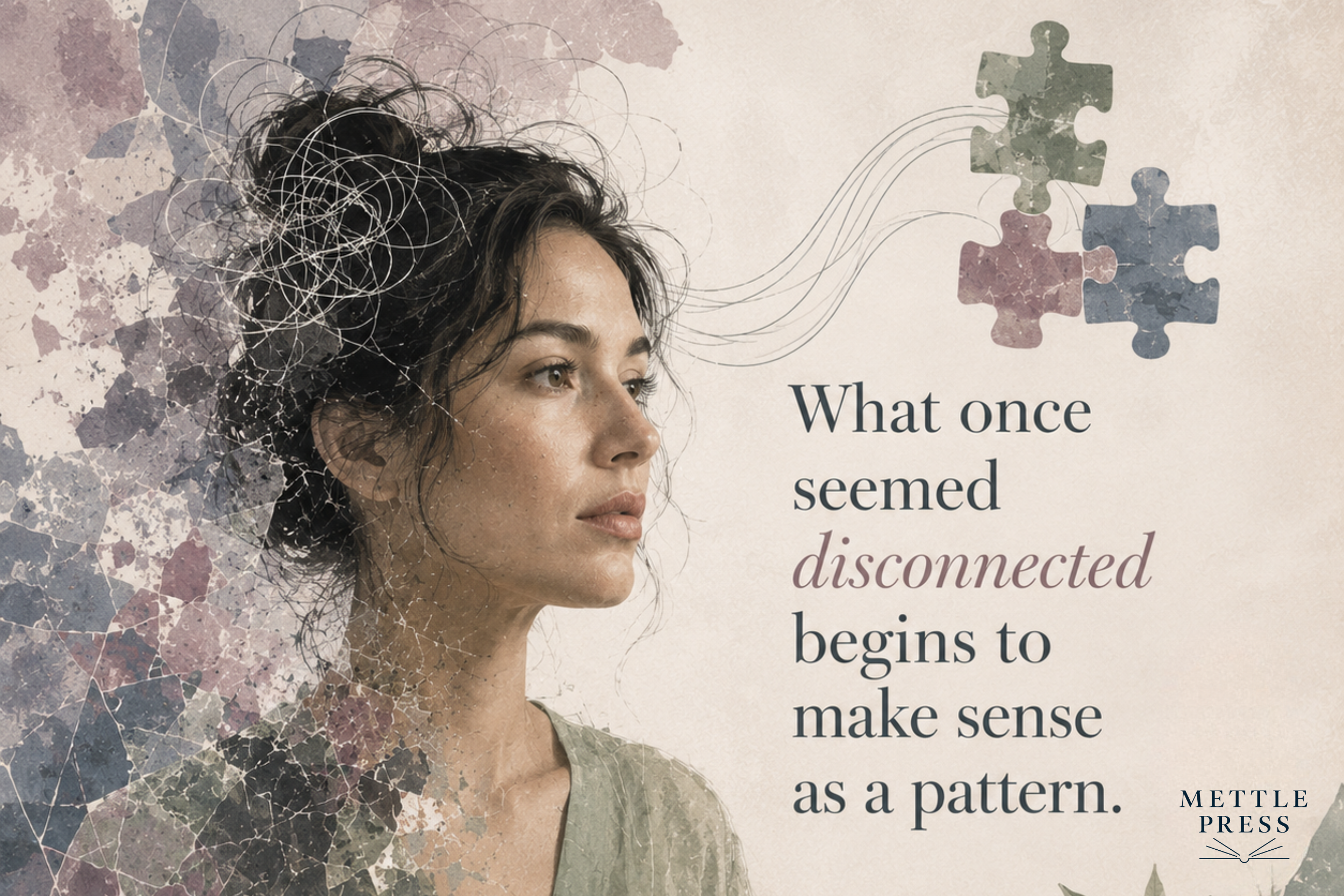
When manipulation, contradiction, control, and repeated attacks on your judgment have defined so much of a relationship, finding language for the pattern can change how you understand what you lived through. For some survivors, learning about narcissism is the first time years of confusion stop looking like a collection of unrelated incidents.
That is why I do not think the answer is to stop using the word. The problem is that narcissist has become such a catch-all that narcissistic traits, NPD, and serious abuse are often treated as interchangeable.
Why the Language Around Narcissism Resonated
Psychological abuse can be difficult to recognize while it is happening because
individual incidents may not reveal the larger pattern. A disagreement somehow becomes your fault. A conversation you remember clearly is later denied or rewritten. You begin choosing your words according to the reaction you expect rather than what you actually want to say.
Control can begin shaping who you see, what you talk about, and how much of your behavior is organized around another person's reactions. You begin pulling back from friends or family because seeing them leads to arguments, accusations, or retaliation. You avoid subjects that reliably trigger the same reactions. You start considering the other person's mood before making ordinary decisions. Eventually, avoiding their reaction can take priority over what you want or need.
Living that way can make each accusation, contradiction, punishment, or outburst feel like a separate problem rather than part of an ongoing pattern.
I understand that personally. So much energy can go into managing the latest incident that you do not immediately see how the pattern is changing your behavior, narrowing your choices, and undermining your confidence in your own judgment.
Then you encounter terms such as gaslighting, blame-shifting, manipulation, love bombing, or narcissistic abuse.
What once seemed disconnected begins to make sense as a pattern.
For someone who has spent months or years questioning their memory or judgment, recognizing that pattern can explain why they started watching for reactions, second-guessed themselves, or changed their behavior to avoid conflict.
The problem begins when language that helps identify patterns is also expected to diagnose the other person, explain their motives, and assign meaning to every interaction.
Narcissistic Traits Are Not the Same as NPD
People can display narcissistic traits without having Narcissistic Personality Disorder.
The American Psychiatric Association describes NPD as a pervasive pattern of grandiosity, need for admiration, and lack of empathy. Features can include entitlement, exploitation of others, arrogance, and fantasies of exceptional success, power, brilliance, beauty, or ideal love. The APA also distinguishes narcissistic traits from the disorder: traits constitute NPD only when they are inflexible, maladaptive, persistent, and cause significant functional impairment or subjective distress.
Someone can therefore be entitled, self-important, hungry for admiration, exploitative, or highly defensive without necessarily having NPD.
A diagnosis cannot be established from individual behaviors either.
Cheating does not prove NPD. Neither does bragging, refusing to apologize, seeking attention, or behaving selfishly. Even manipulation, intimidation, cruelty, or controlling behavior cannot by itself tell us what psychiatric diagnosis a person has.
That distinction does not excuse manipulation, intimidation, cruelty, or control. It separates harmful behavior from a diagnosis that cannot be established from those behaviors alone.
Separating NPD From Abuse Does Not Mean Ignoring Risk
Distinguishing narcissistic traits, NPD, and abuse does not erase the research linking narcissism with aggression and some forms of partner abuse. Those findings do not mean that every person with NPD is abusive or violent.
Studies have found associations between narcissism and aggression, including stronger aggression when people feel provoked. Vulnerable narcissism, in particular, has been linked with reactive aggression, meaning aggression in response to perceived threats, criticism, rejection, or provocation.
Research on intimate partner violence has also found a weaker but still measurable association between narcissistic traits and some forms of partner abuse, especially psychological abuse and abuse carried out through digital communication. That review did not find the same association with physical violence.
These studies measured narcissism and narcissistic traits across groups of participants. They did not focus exclusively on people diagnosed with NPD, so they cannot tell us whether any particular person with NPD will be abusive or violent.
The research supports taking the links between narcissism, aggression, and some forms of partner abuse seriously. It does not support treating an NPD diagnosis as proof of abuse.
When Pop Psychology Claims to Know the Motive
Online discussions often move from describing what someone did to claiming certainty about why they did it.
Intense affection becomes love bombing. Withdrawal becomes punishment. Anger becomes narcissistic rage. Contact after a breakup becomes hovering.
Those terms can connect behaviors that previously seemed like unrelated incidents.
Recognizing a pattern, however, does not prove what another person intended.
A person may know they were controlled, intimidated, manipulated, or repeatedly humiliated. They may never know whether every affectionate gesture was calculated, whether every withdrawal was intended as punishment, or whether the other person consciously understood the effect of what they were doing.
I understand why that uncertainty can be difficult to live with.
When someone's behavior has made you question your memory or judgment for years, an explanation can help you understand why so little of the relationship seemed to make sense.
But recognizing the harm does not require proving the motive behind every interaction.
You can know that someone controlled you without knowing precisely why. You can know that repeated manipulation damaged your confidence without proving what the person intended each time.
What Gets Lost When “Narcissist” Describes Everything
When narcissist is used for everything from vanity to sustained psychological abuse, very different experiences end up described by the same word.
Ordinary Bad Behavior Starts Sounding Like a Diagnosis
People can be selfish, arrogant, dishonest, jealous, defensive, or terrible at handling criticism without having a personality disorder.
Those behaviors can damage relationships without telling us whether a personality disorder is present.
Calling every selfish or hurtful act narcissistic does not necessarily explain it more clearly. Sometimes it only makes ordinary bad behavior sound like evidence of a psychiatric condition.
There is value in saying plainly that someone lied, humiliated you, ignored your boundaries, behaved selfishly, or treated you badly without turning every harmful act into evidence of a disorder.
NPD Becomes Another Word for “Abuser”
The opposite problem occurs when narcissist becomes synonymous with dangerous, evil, or abusive.
That treats a diagnosis as proof of behavior. Whether someone controlled, threatened, assaulted, humiliated, or abused another person is established by what they did.
Severe Abuse Gets Reduced to “Difficult Relationship”
This is the consequence I care about most.
One person may call an ex a narcissist because that person was vain, self-centered, or desperate for attention.
Another may use the same word while trying to describe years of financial control, isolation, intimidation, surveillance, humiliation, retaliation, and psychological manipulation.
Those experiences are not comparable simply because the same label is used for both.
For someone who has lived through serious narcissistic or psychological abuse, that difference affects whether other people understand the severity of what happened or hear it as ordinary relationship conflict.
There is a profound difference between dealing with someone who is selfish and living in a relationship where another person's behavior gradually changes how you speak, who you see, what choices you make, and whether you trust your own perception of reality.
When narcissist becomes shorthand for every selfish ex or difficult parent, someone describing severe abuse may find that listeners think they already understand the situation before hearing what actually happened.
A term that helped survivors recognize coercion, manipulation, and psychological harm can become so overused that other people hear little more than “difficult relationship.”
Survivors can keep the language that helped them understand what happened without stretching it so broadly that severe abuse becomes harder to distinguish from ordinary selfishness, conflict, or bad behavior.
What the Behavior Tells Us
I understand why calling someone a narcissist can feel important.
Sometimes discovering the language of narcissistic abuse is what finally allows someone to stop wondering whether they imagined everything.
But the label alone does not show what happened inside the relationship. The behavior does.
There is a difference between saying:
“My partner was a narcissist.”
and:
“My partner controlled our money, monitored where I went, punished me for seeing friends, repeatedly denied events I remembered clearly, and made me afraid to disagree.”
The second tells us what the first cannot: the control, isolation, intimidation, and psychological harm the person actually lived through.
It also means a survivor's experience does not have to depend on proving another person's psychiatric diagnosis.
Control is still control. Isolation is still isolation. Intimidation is still intimidation.
Psychological abuse does not become less serious because the person responsible was never diagnosed, refused evaluation, or cannot be diagnosed from someone else's account.
Where I Land on the Word “Narcissist”
My own experience makes me unwilling to minimize narcissistic abuse.
It also makes me unwilling to treat every selfish, arrogant, or difficult person as though they represent the same kind of harm.
What concerns me is what happens when the word becomes broad enough to describe both an unpleasant personality and a relationship that has changed someone's freedom, confidence, relationships, or trust in their own perception.
The label may help someone make sense of the person who harmed them.
The behavior tells us what they survived.